About

Drafting Desk

Follow the evolving psychological novel from first sketch to final cut.
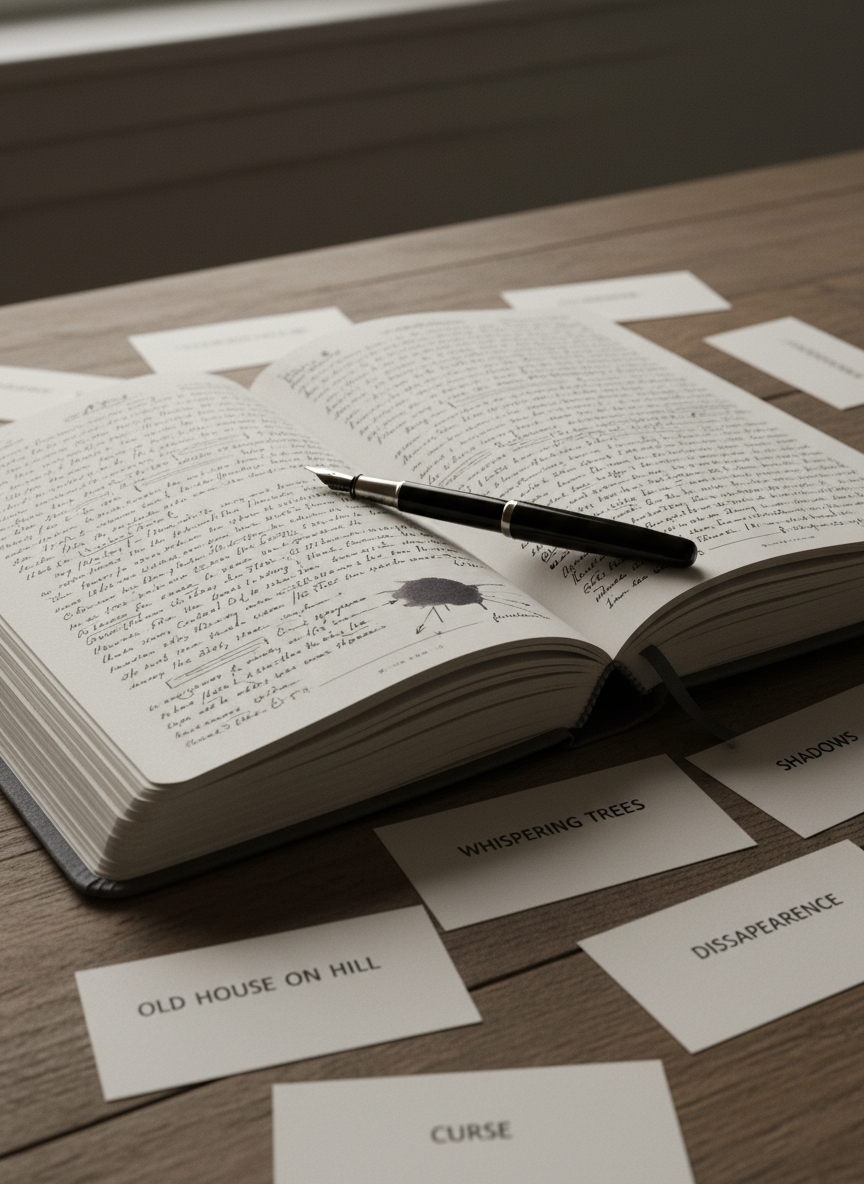
A heavy, clothbound notebook in deep charcoal gray lies open on a weathered wooden desk, its thick cream pages filled with dense, looping handwritten notes and margin arrows. A black metal fountain pen rests diagonally across the center fold, a faint ink blot darkening the paper fibers. Around it, scattered index cards, some overturned, reveal cryptic scene fragments and single ominous words. Soft, overcast afternoon light seeps in from an unseen window, creating gentle, elongated shadows and a subdued, contemplative mood. Shot at an eye-level, three-quarter angle in photographic realism, with a shallow depth of field that keeps the notebook razor-sharp while the surrounding cards dissolve into a soft, sophisticated blur.
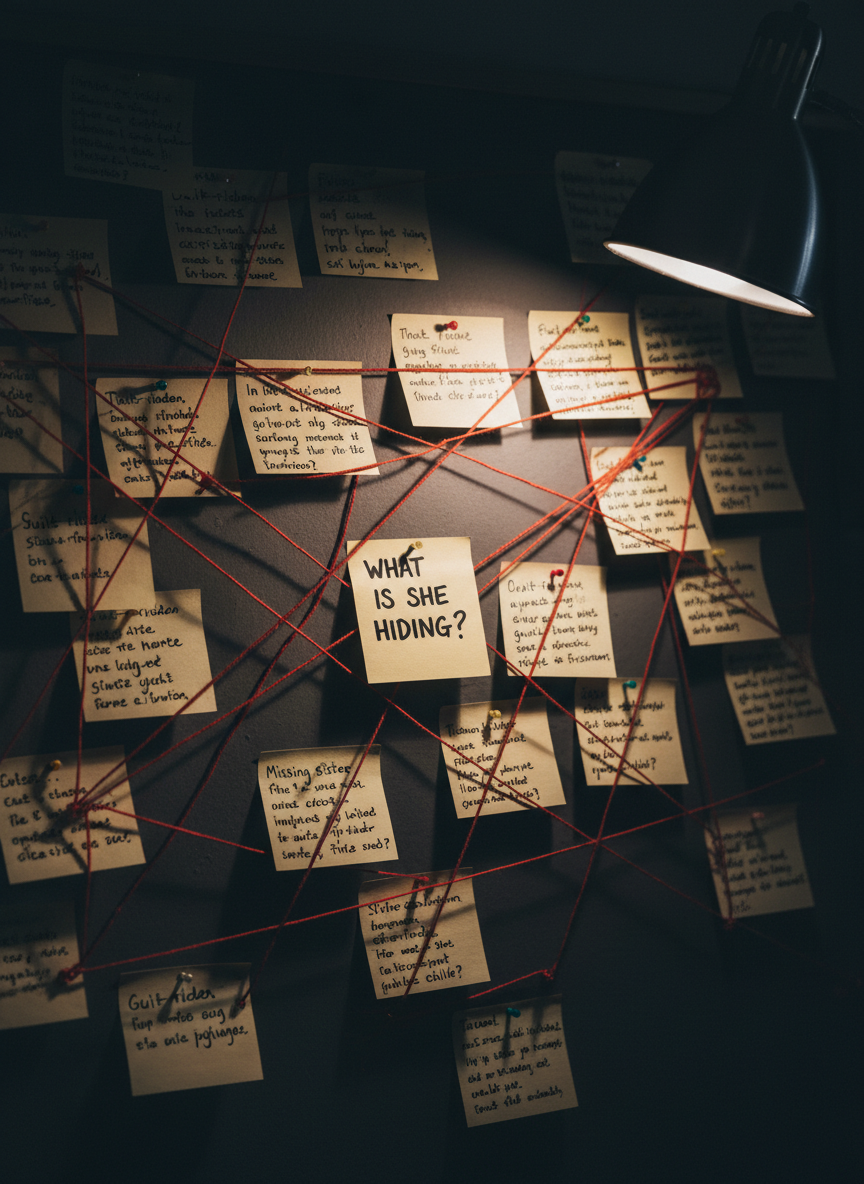
A corkboard mounted on a matte, slate-colored wall is densely covered with overlapping index cards, red string connections, and small adhesive notes, all filled with meticulous, handwritten character traits and plot turns. A single card at the center reads “What is she hiding?” in bold ink. A slim, brushed-steel desk lamp casts a cone of warm, focused light from the upper right, leaving the room beyond in elegant darkness. This creates stark, cinematic contrasts and elongated string shadows that crisscross the board. Photographic realism with a slightly low, close-up angle and shallow depth of field draws attention to the central question card, evoking an analytical, suspenseful mood aligned with psychological storytelling.

Inside L.A. Keane’s Mind

I’m L.A. Keane, a writer of psychological fiction obsessed with quiet ruptures, unreliable memories, and the stories people tell themselves to stay afloat. This site collects messy drafting notes, experiments, and process reflections as the current novel takes shape.
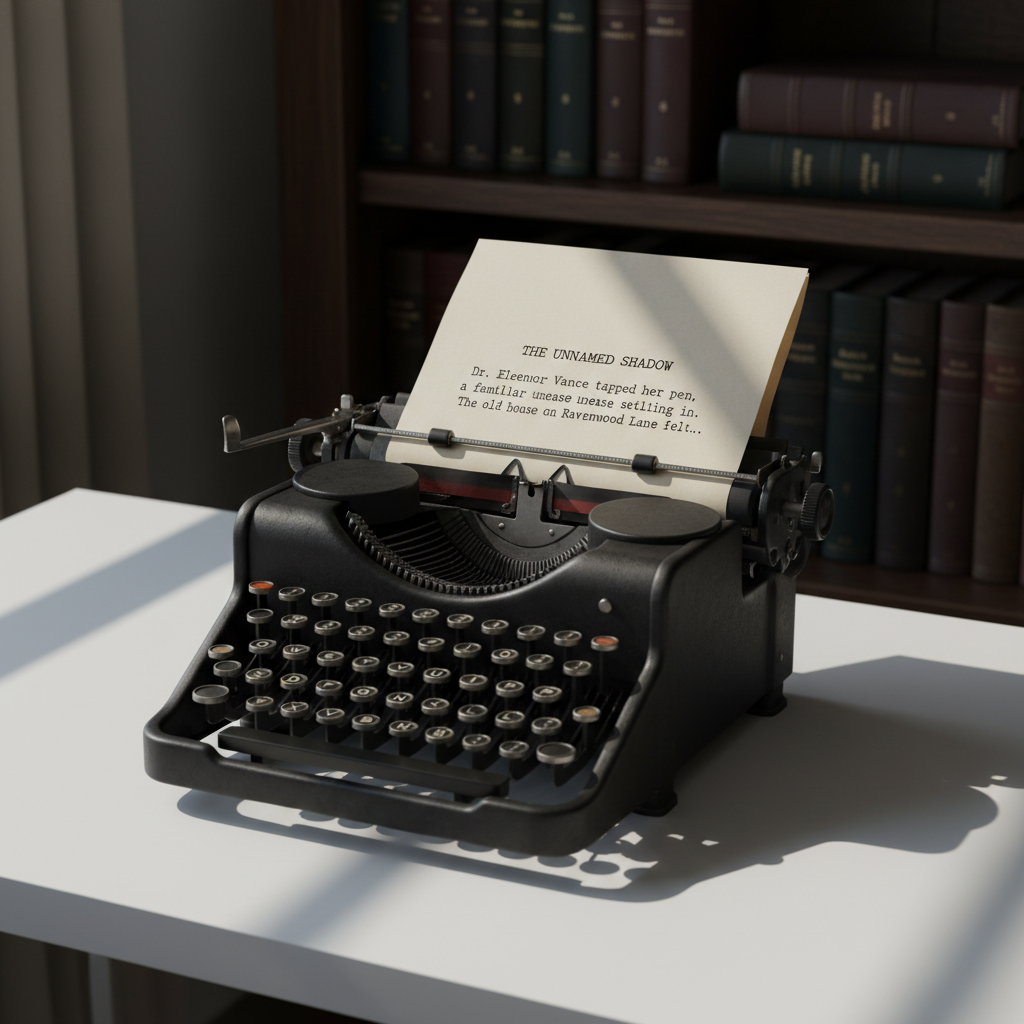
An antique typewriter in matte black metal sits alone on a minimalist white desk, its round keys worn to a subtle sheen, a single sheet of off-white paper threaded through the roller. On the page, only a title and a few tentative first lines show, with the cursor position implied by a faintly indented mark. In the background, out of focus, rows of psychology textbooks and well-thumbed novels line a dark wooden shelf. Cool, diffused morning light from the left casts precise, graphic shadows of the keys, creating a quiet, expectant atmosphere. Photographic realism, captured from a slightly elevated angle with rule-of-thirds composition, emphasizes the tension of beginning a psychological fiction draft.
A heavy, clothbound notebook in deep charcoal gray lies open on a weathered wooden desk, its thick cream pages filled with dense, looping handwritten notes and margin arrows. A black metal fountain pen rests diagonally across the center fold, a faint ink blot darkening the paper fibers. Around it, scattered index cards, some overturned, reveal cryptic scene fragments and single ominous words. Soft, overcast afternoon light seeps in from an unseen window, creating gentle, elongated shadows and a subdued, contemplative mood. Shot at an eye-level, three-quarter angle in photographic realism, with a shallow depth of field that keeps the notebook razor-sharp while the surrounding cards dissolve into a soft, sophisticated blur.
A corkboard mounted on a matte, slate-colored wall is densely covered with overlapping index cards, red string connections, and small adhesive notes, all filled with meticulous, handwritten character traits and plot turns. A single card at the center reads “What is she hiding?” in bold ink. A slim, brushed-steel desk lamp casts a cone of warm, focused light from the upper right, leaving the room beyond in elegant darkness. This creates stark, cinematic contrasts and elongated string shadows that crisscross the board. Photographic realism with a slightly low, close-up angle and shallow depth of field draws attention to the central question card, evoking an analytical, suspenseful mood aligned with psychological storytelling.
An antique typewriter in matte black metal sits alone on a minimalist white desk, its round keys worn to a subtle sheen, a single sheet of off-white paper threaded through the roller. On the page, only a title and a few tentative first lines show, with the cursor position implied by a faintly indented mark. In the background, out of focus, rows of psychology textbooks and well-thumbed novels line a dark wooden shelf. Cool, diffused morning light from the left casts precise, graphic shadows of the keys, creating a quiet, expectant atmosphere. Photographic realism, captured from a slightly elevated angle with rule-of-thirds composition, emphasizes the tension of beginning a psychological fiction draft.

Themes, Influences, Process

Expect echoes of Gothic tension, contemporary trauma studies, and character-driven mysteries. I’m interested in how interior monologue, fragmented structure, and sensory detail can reveal pressure points—where ordinary lives slip, crack, and quietly become something unrecognizable.